Villa romana de La Estaca

A tour of the Roman heritage of the council through audiovisual content, 3D reconstructions and immersive experiences.

A connected archaeological landscape

The territory of Las Regueras

This project proposes a route that connects the sites located in the council through digital resources that help to understand their historical context and their relationship within the Roman rural landscape.

Audiovisual production

The video presents a panoramic view of the archaeological heritage of Las Regueras, offering a general context that allows one to learn about some of its most outstanding sites.

Excavation La Estaca

Use our interactive geospatial WebApp for geolocated exploration and 3D viewing of the archaeological remains of the Roman villa of La Estaca.

Immersive 360 ​​Experience

Access an immersive experience that allows you to discover the surroundings of the Roman villa from an enveloping perspective.

The deposits

Valduno Hot Springs

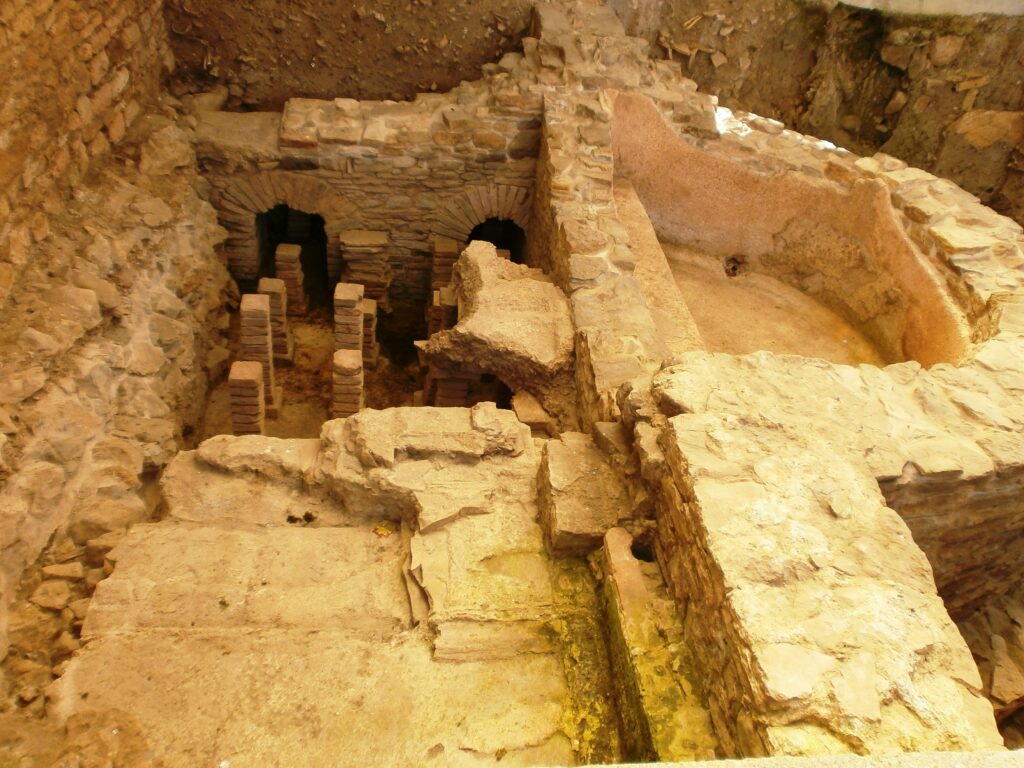
Recent archaeological explorations carried out on the southern side of the parish church of Santa Eulalia de Valduno, under the direction of Mr. Rogelio Estrada, have brought to light the remains of an important and exceptionally well-preserved Roman-era thermal complex.

Archaeological excavations have allowed the documentation of part of the Caldarium and the Tepidarium of some Baths of considerable size that correspond to the canonical orientation recommended by the treatises on Roman architecture.

The excellent preservation of the remains of both the tepidarium heating system and one of the alvei or caldarium baths is noteworthy.

This last one, the best preserved in Asturias, retains traces of red paint on its interior lining. Its construction dates from the second half of the 1st century.

Over these Roman remains is superimposed a necropolis from the Medieval and Modern periods, associated with successive temples from these periods that have been established on the thermal building. 1st century.

The ruins can be viewed from outside the fenced facility that houses them.

The deposits

Villa romana de La Estaca

The Roman villa of San Martín de la Estaca or Andallón is an archaeological site known since the mid-19th century, when it was mentioned in Pascual Madoz’s Historical-Geographical Dictionary (1845-1855). The presence of archaeological remains in the area was already known at that time.

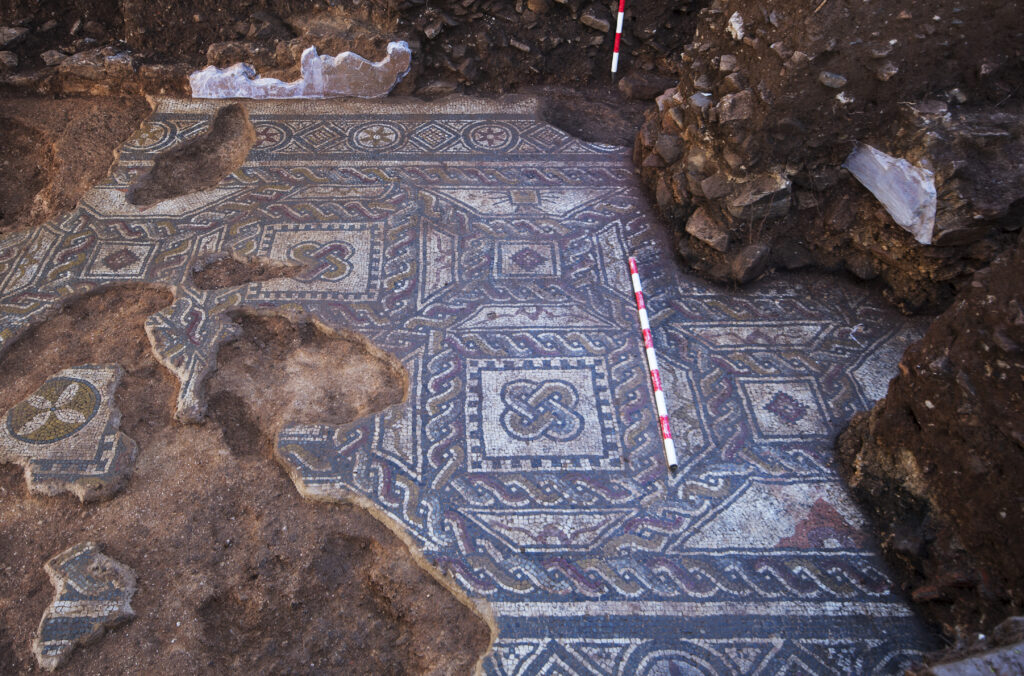
In 1958, during the widening of the road between La Estaca and Andallón, construction remains and a Roman mosaic were discovered, documented by José Manuel González. In 1961, the archaeologist Francisco Jordá carried out an excavation to remove the paving stones and transfer them to the Provincial Archaeological Museum.

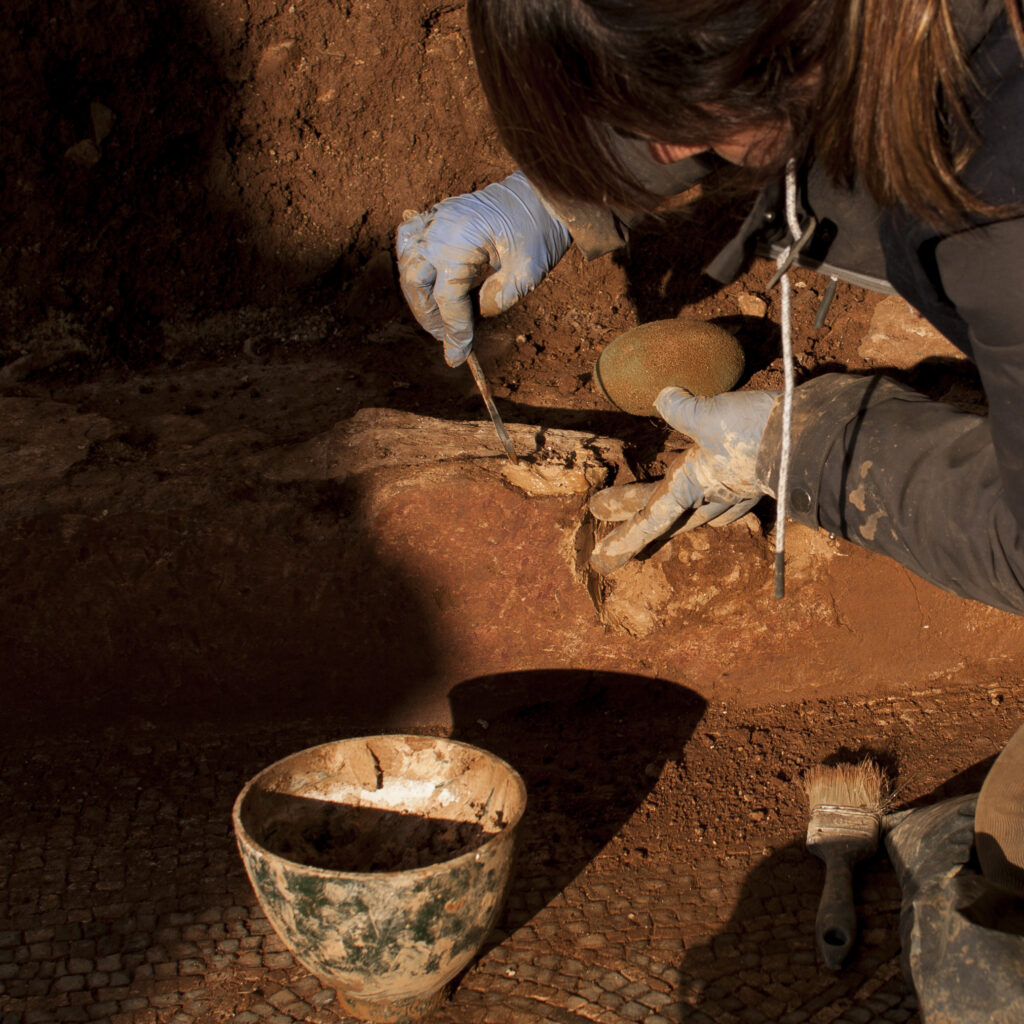
The investigations resumed in 2013, when new works allowed the site to be located again. Since then, several archaeological campaigns directed by Juan Ramón Muñiz have been carried out, expanding our knowledge of the site.

In 2018 a second decorative mosaic appeared in excellent condition, confirming the importance of this Roman rural complex.

Subsequent excavations have allowed the recovery of part of the main building, whose surface area exceeds 900m², in addition to identifying new rooms, water evacuation systems and structures linked to the thermal area of ​​the villa.

The most recent campaigns have focused on the study of the balnea or baths of the complex, where spaces such as the apodyterium (changing room), the frigidarium (cold water bath) and sectors of the hypocaust that heated the warm and hot rooms have been excavated.

The site has sparked growing scientific and social interest, generating collaborations with international institutions, participation in conferences and the creation of the Association of Friends of the Roman Villa of San Martín de La Estaca, dedicated to the dissemination and protection of the site.

Authorship: Juan Muñiz, Archaeologist and Director of the Excavation

Villa romana de La Estaca Las Regueras · Asturias

Project for the dissemination of archaeological heritage.

© 2026 Ayuntamiento de las Regueras